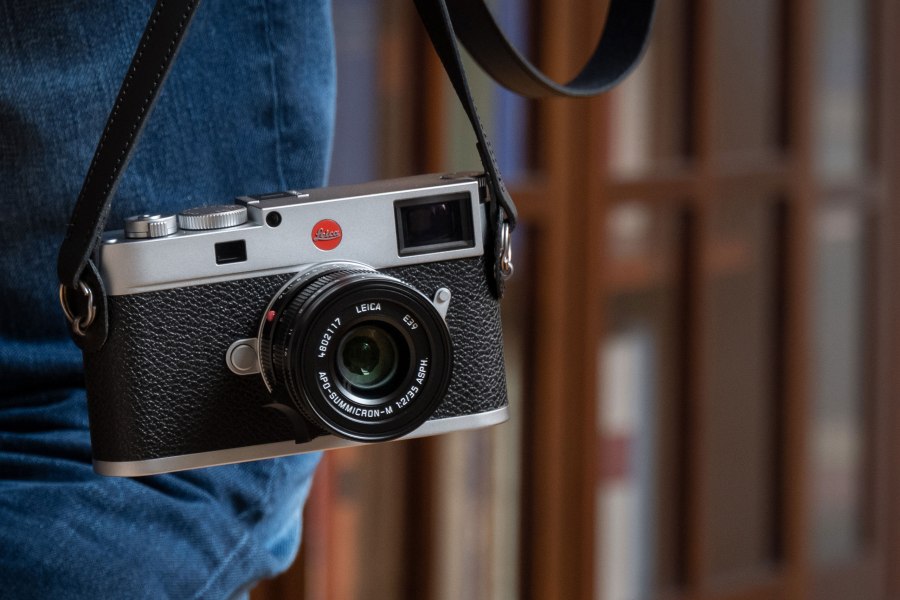
Ah, the best Leica cameras. Expensive, yes. But there’s something undeniably and classically cool about that red dot and the sleek, perfectly engineered cameras that wear it. The brand has earned and retained its cachet among serious photographers for decades, who wouldn’t settle for less than the best cameras for photography.
We review Leica cameras just as we do new releases from other brands. We know very well that their prices exclude them to all but the most well-heeled enthusiasts – meanwhile, the rest of us aspire to own one, as the experience of shooting with a Leica is like nothing else. Whether a compact Q camera, a digital rangefinder like the M11, or an L-mount mirrorless model, they all ooze style and quality.
The list below includes not just the best new Leica cameras, but also a few previous-generation options that have undergone price reductions. If you are ready to splurge on a Leica but not sure which model would suit you best, there’s a helpful explainer on how to buy the best Leica camera at the bottom of this page. However, if you already know what you are looking for and are ready to dive in, you’ll find the highest-rated Leica cameras tested by our review team below – so, let’s get a closer look.
The best Leica cameras: quick list
- Best Leica rangefinder: Leica M11 – Buy now
- Best Leica compact: Leica Q3 43 – Buy now
- Best Leica mirrorless: Leica SL3 – Buy now
- Best Leica for black & white: Leica M11 Monochrom – Buy now
- Best Leica compact zoom: Leica D-Lux 8 – Buy now
- Best film Leica: Leica MP – Buy now
For the best deal on Leica cameras: not only will you find the best Leica camera, but also some of the best camera deals, as our ‘Buy now’ buttons are set to automatically take you to the best prices from trusted retailers. There is a list of other retailers below each camera, so you can find the right deal for you.
Why you can trust Amateur Photographer
We spend many hours testing every product we recommend, in detail, in a variety of situations and shooting scenarios, and only use experts for our reviews, so you can be sure that you’re getting the best products. Find out more about our expert writers.
Best overall
Best Leica rangefinder: Leica M11
Amateur Photographer verdict
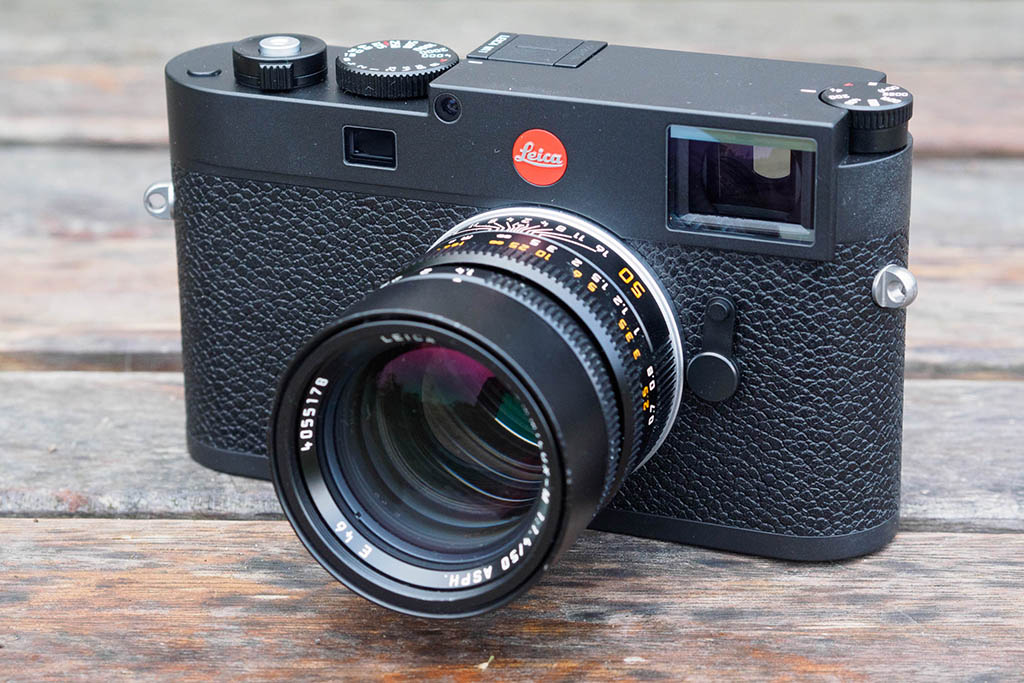
Resembling the previous M10 rangefinder, on the inside the Leica M11 is in fact a complete redesign; with clever variable-resolution shooting and a sublime rangefinder experience.- Excellent image quality
- Good battery life
- Beautiful design and ergonomics
- Manual focus only
| Specifications | Leica M11 |
|---|---|
| Type | Rangefinder |
| Sensor | 60MP full-frame BSI-CMOS sensor |
| ISO | ISO 64-50,000 |
| Continuous shooting | 4.5 fps |
| Video | No |
For lovers of minimalism in camera design, the Leica M series is a classic. The latest digital iteration of a series that harks back all the way to 1955 brings a number of number of innovations in a sleek and traditional body.
It has a 60 megapixel sensor – great, but which can eat up a lot of processing power. To speed things up a little, you can output raw files at 36 or 18 megapixels instead, allowing you to choose the best resolution for a situation.
We found in our review that, like other M series cameras before it, the M11 uses an ultra-robust design which is simply lovely to look at; as well as to use. Using a rangefinder takes a bit of getting used to – manual focusing via the viewfinder doesn’t always yield perfect results, particularly if you’re used to shooting with more modern techniques, but it’s special when you nail it.
We found that the M11 produced superb images, and if you really do want the best of the best – and have the budget to go with it – this camera surely sits at the top of many a photographer’s wish list.
Two notable stablemates from the M11 lineup are the recent (September 2024) Leica M11-D with a large ISO dial replacing the rear LCD screen, and the Leica M11-P: the firm’s first camera with Content Credentials hardware added.
Read our full Leica M11 review.
Best Leica compact
Best Leica compact: Leica Q3 43
Amateur Photographer verdict
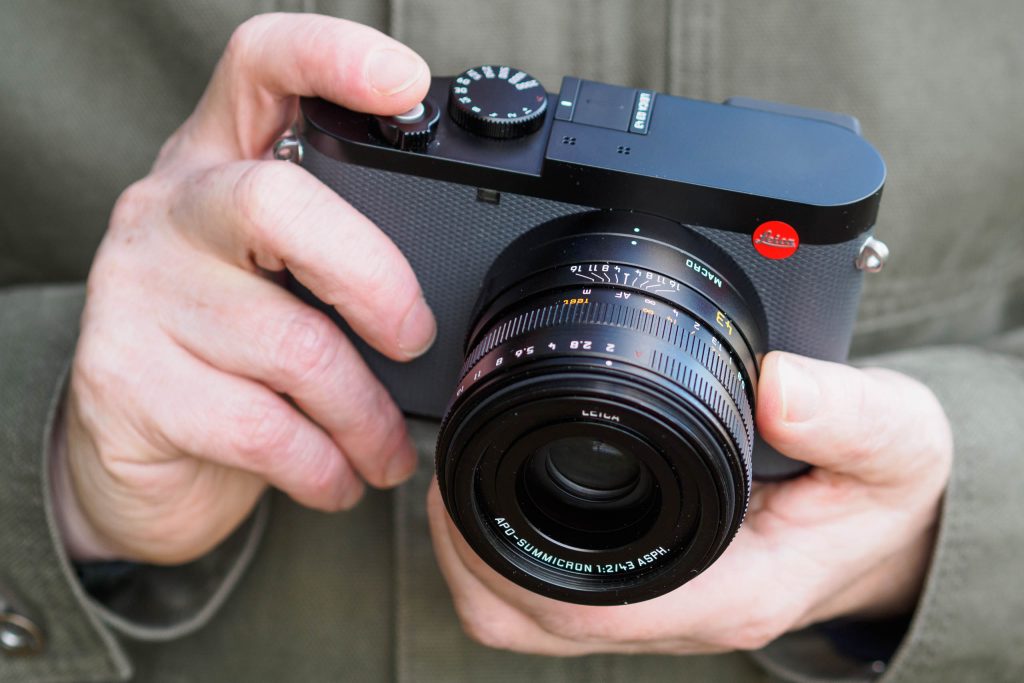
The addition of a superb 43mm f/2 lens elevates the Leica Q3 43 to new heights. It’s a stunning camera that produces sensational image quality – at a price.- Superlative new 43mm f/2 lens
- Superb raw image quality
- Extremely robust build
- Engaging dial-led controls
- Excellent viewfinder
- Leica Looks make for more interesting JPEGs
- Screen only tilts up and down
- JPEG output still isn’t great
| Specifications | Leica Q3 43 |
|---|---|
| Type | Full-frame |
| Sensor | 60MP full-frame sensor |
| ISO | ISO 50-100,000 (extended) |
| Continuous shooting | Up to 15 fps continuous shooting (5fps with C-AF) |
| Video | 8K 30fps video shooting |
The original Leica Q3, which like its predecessors sported a 28mm f/1.7 lens, was extremely impressive; we considered it the best compact camera around. Now the firm has decided to mix things up, with this version that sports a brand-new 43mm f/2 lens – the Leica Q3 43.
Don’t be perturbed by that odd-sounding 43mm focal length. Why not something more familiar, like 35mm or 50mm? The idea is that 43mm is equal to the diagonal of the sensor, and lenses of this ilk bring a particularly natural-looking perspective to images. Many photographers – including our own – prefer lenses in the 40-45mm region to either 35mm or 50mm.
Shutter speeds are available from 120sec to 1/2000sec using the in-lens mechanical shutter, extending to 1/16,000sec with the electronic shutter. For long exposures, you get a handy ‘T’ mode, which is far more convenient than the usual Bulb option; one press of the button starts the exposure and a second ends it.
Leica also exploits the 60MP sensor to offer a genuinely useful Digital Zoom that crops into the image to match familiar focal lengths. The image area is indicated by a frameline in the viewfinder, with the camera saving both a cropped JPEG and full-size raw file alongside (with the crop embedded into its metadata). You get 60mm, 75mm, 90mm, 120mm and 150mm options giving 31MP, 20MP, 14MP, 8MP and 5MP files, respectively. You can see how these look in the slideshow below.
The Q3 43 should be better suited to subjects such as environmental portraiture, street shooting, and general family photography. But the original Q3 (also known as the Q3 28) would arguably be the better choice for landscapes, cityscapes, and travel photography. And of course, there’s the Q3 Monochrom for black and white enthusiasts.
Read our full Leica Q3 43 review.
Best Leica mirrorless
Best Leica mirrorless: Leica SL3
Amateur Photographer verdict
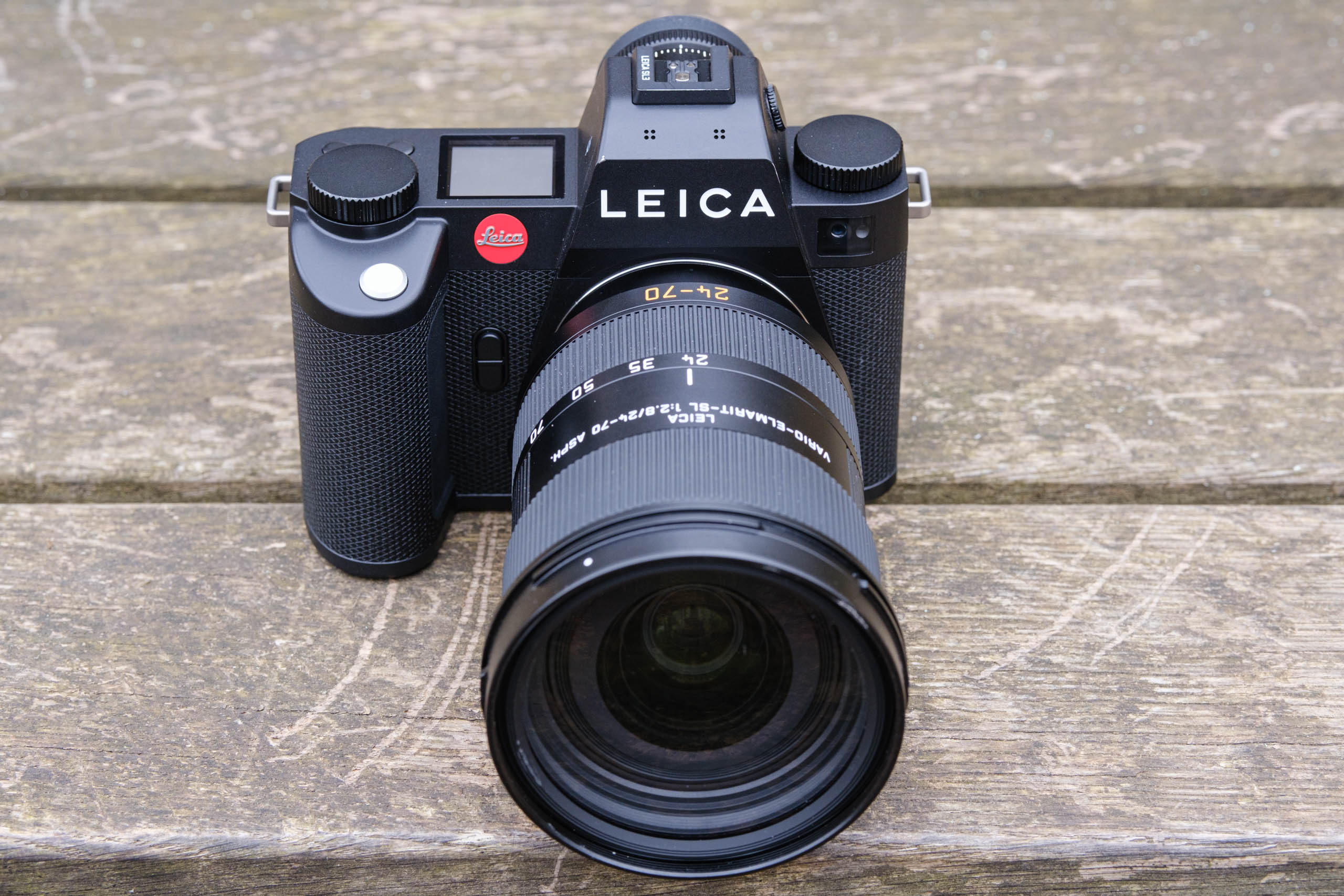
The best Leica mirrorless camera you can buy, the Leica SL3 brings once again that 60MP resolution, along with an amazingly robust build quality and well-designed UI.- Superb image quality
- Bomb-proof build
- Phase-detect autofocus
- Battery life not the best
- Some odd control placements
| Specifications | Leica SL3 |
|---|---|
| Type | Mirrorless |
| Sensor | 60.3MP full-frame sensor |
| ISO | ISO 50-100,000 |
| Continuous shooting | Up to 15 fps shooting |
| Video | 8K 30fps video shooting |
Powerful enough to stand toe-to-toe with the biggest and best full-frame cameras (good news, since it’s more expensive than any of them), the Leica SL3 packs in the same 60MP sensor with phase-detect autofocus as the Leica Q3. This means it’s got that same brilliant blend of high speed and outstanding image quality. Its mirrorless body is built like a tank, shaped like an SLR and rated to IP54 for its weatherproofing and water protection (it’ll handle spray but not submergence).
Its various upgrades and features make the SL3 a more serious player in the pro mirrorless market than its predecessors in the SL series ever were. Yes, the Sony A7RV can do all the same stuff for less money, but the SL3 is markedly more pleasant to use. The Nikon Z9 may be better for action, but there’s a certain prestige in turning up to a job holding a Leica. The L-mount lens selection is excellent now and, given that the SL3 can also use M-mount and legacy R-mount Leica lenses, you’ll never lack quality glass.
Read our full Leica SL3 review.
Best for B&W
Best Leica for black & white: Leica M11 Monochrom
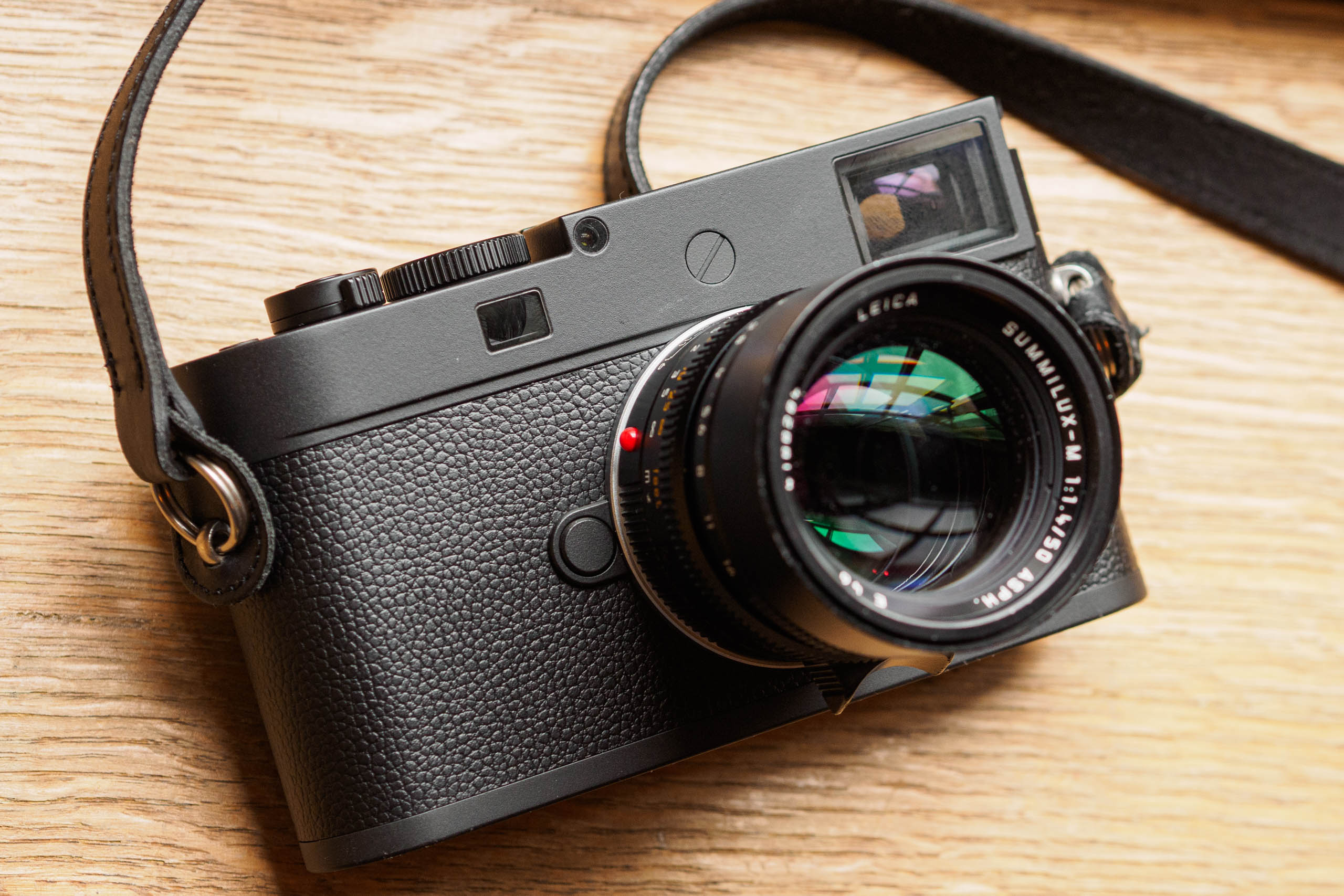
Amateur Photographer verdict
Leica’s best monochrome-only camera, this offers shooters a truly unique experience. Cool, classic black & white via an interface that’s all 21st century.- Superb high-resolution imagery
- 256GB of built-in storage
- Electronic shutter and highlight metering
- Expensive, even for Leica
- No video functionality
| Specifications | Leica M11 Monochrom |
|---|---|
| Type | Rangefinder (B&W only) |
| Sensor | 60MP full-frame back-illuminated CMOS sensor |
| ISO | ISO 125-200,000 range |
| Continuous shooting | Up to 15 fps shooting |
| Video | No |
Leica may have seemed bonkers at first when it announced it would be producing expensive versions of its digital cameras with no colour filter at all – restricting them to producing black & white imagery. However, the concept has proven popular with a certain type of shooter, and the Leica M11 Monochrom is the best example yet. Those willing and able to drop $9,495 / £8,300 on a monochrome-only camera will be pleased to know that this one is a triumph.
Ultimately, a thing like this lives or dies on its image quality, and the superb 60.4MP resolution produced by the Leica M11 Monochrom is knockout, drop-dread gorgeous. Like the Q3 and M11 classic, the resolution can be dropped down if you don’t need all those pixels – though Leica has incorporated 256GB of internal storage to help matters. The camera can shoot up to ISO 200,000, and its performance even at higher settings is commendable. An advantage of black & white is that image noise is more likely to look like stylish film grain; such is the case here.
Read our full Leica M11 Monochrom review.
Best MFT Leica
Best Micro Four Thirds Leica: Leica D-Lux 8
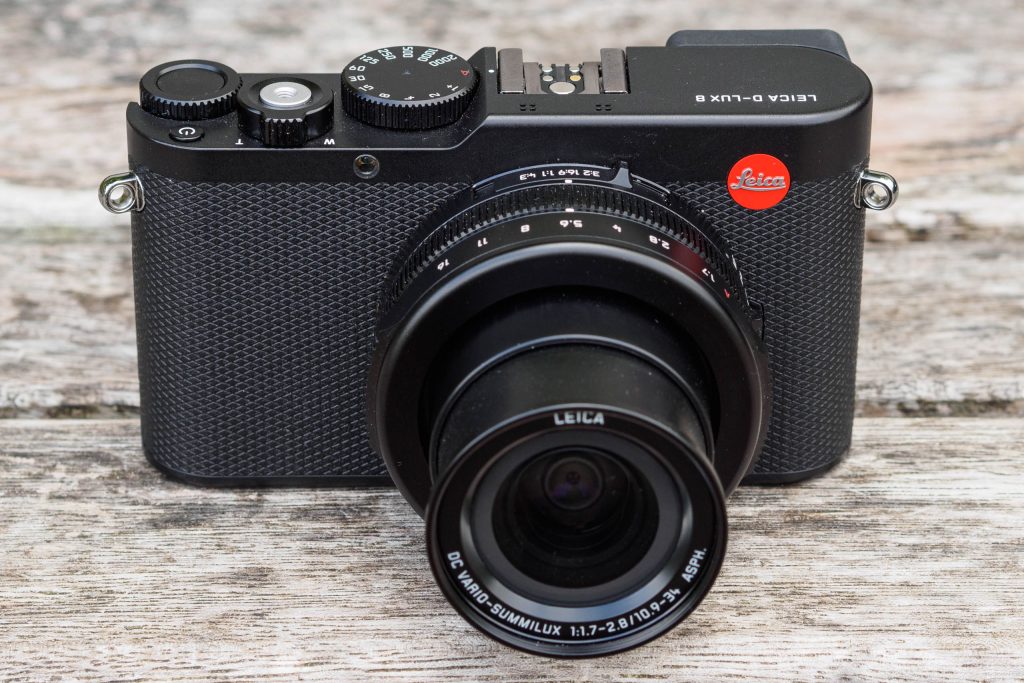
Amateur Photographer verdict
Traditional control dials, and a multi aspect ratio sensor make the D-Lux 8 a joy to use and create with. Its JPEGs can be dull; best results obtained from raw.- Large aperture zoom lens
- Unique multi-aspect ratio sensor
- Much improved viewfinder over D-Lux 7
- User-friendly DNG-format raw recording
- Non-tilting rear screen
- Uninspiring JPEG colour
- Minimal handgrip
| Specifications | Leica D-Lux 8 |
|---|---|
| Type | Micro Four Thirds |
| Sensor | 17MP Four Thirds multi aspect-ratio sensor |
| ISO | ISO 100-25,000 |
| Continuous shooting | Up to 11fps shooting |
| Video | 4K 30p video recording |
The D-Lux 8 employs a smaller Four Thirds type sensor with a clever multi-aspect ratio design, joined by a 24-75mm equivalent zoom with a bright f/1.7-2.8 aperture. It has traditional photographer-friendly controls for the main exposure settings, and a corner-mounted viewfinder in a flat-bodied ‘rangefinder-style’ design, which make it a joyous thing to use.
This camera utilises its 20MP Four Thirds sensor in a unique way. It never uses the entire sensor area to create images, but instead crops in to offer a range of aspect ratios with the same diagonal angle of view.
The zoom lens provides a good level of compositional flexibility, and our reviewer really appreciated changing aspect ratios via a switch on the lens. It’s great to see an improved viewfinder, too, which fixes one of our biggest gripes with the LX100 II/D-Lux 7.
Read our full review of the Leica D-Lux 8.
Best film Leica
Best film Leica: Leica MP

Amateur Photographer verdict
An impeccible pedigree of a camera at an eye-watering price, the Leica MP is the dream film camera for professionals.- Traditional analogue controls
- Stylish look
- Brilliant viewfinder
- Lens is same price as camera itself
- Film is pricey these days
| Specifications | Leica MP |
|---|---|
| Type | Analogue rangefinder |
| ISO | 35mm film |
Pretty much every Leica evokes the nostalgic in all of us, but nothing turns back the clock quite like the magic of analogue. The Leica MP uses a 35mm film alongside a traditional, mechanical rangefinder and the camera is made with such a level of craftsmanship it is one of the most desirable and coveted film cameras for professional photographers.
It boasts a near perfect user interface and, compared to DSLR, a lightweight 585g compact body that feels totally natural to hold with a bit of heft from the largely metal design, which feels apt. The front panel has the long-standard Leica M bayonet mount that gives you a range of options for impressive optics of different focal lengths and a good number of third-party lenses. So, how would we sum up the Leica MP? This is by far one of the best rangefinders our reviewer John Gilbey has ever used.
Read more in our full Leica MP review.
Specifications compared
| Specifications | Leica M11 | Leica Q3 43 | Leica SL3 | Leica M11 Monochrom | Leica D-Lux 8 | Leica MP |
|---|---|---|---|---|---|---|
| Type | Rangefinder | Full-frame | Mirrorless | Rangefinder (B&W only) | Compact camera | Film rangefinder |
| Sensor | 60MP full-frame BSI-CMOS sensor | 60MP full-frame sensor | 60.3MP full-frame sensor | 60MP full-frame back-illuminated CMOS sensor | 17MP Four Thirds multi aspect-ratio sensor | No |
| ISO | ISO 64-50,000 | ISO 50-100,000 (extended) | ISO 50-100,000 | ISO 125-200,000 range | ISO 100-25,000 | 35mm film |
| Continuous shooting | 4.5 fps | Up to 15 fps continuous shooting (5fps with C-AF) | Up to 15 fps shooting | Up to 15 fps shooting | Up to 11fps shooting | No |
| Video | No | 8K 30fps video shooting | 8K 30fps video shooting | No | 4K 30p video recording | No |
How to buy the best Leica camera
When considering which Leica camera is the best option for you there are a number of things you might want to consider, including the following:
Type of camera
Leica currently manufactures a range of different types and styles of cameras.
As well as offering the latest mirrorless technology in the shape of its SL range, there’s also rangefinder cameras which are a traditional technology which won’t suit everybody. With these models, you can only manually focus, and generally have to get used to shooting in a certain way through an optical viewfinder. Leica also offers premium compact cameras, film cameras and even bridge-style cameras.
With such a range of camera types, it pays to do some research on each before you commit to buying one – especially if you’ve never invested in a Leica before.
Autofocusing or manual focusing
What it might simply come down to is your preferred way of focusing. If you want to shoot rapidly moving action, manual shooting isn’t generally preferred by modern photographers. As such, standard mirrorless cameras or even the premium compact options from Leica will probably offer you the best experience.
On the other hand, manual focusing is favoured by some for its more slower, more considered approach. You also have more complete control over very aspect of the shooting experience, which can be appealing for many.
Analogue or digital
Most of us shoot digitally these days, and indeed the vast majority of the cameras on this list are digital offerings.
However, there’s still something very special about shooting film with analogue cameras. Plenty of analogue Leica models are available, particularly in the second-hand market. Interestingly, Leica is just about the only major or big manufacturer that still announces new film models; the Leica M6 came out in November 2022.
Fixed lens or interchangeable
If you’re keen for maximum flexibility, then one of Leica’s interchangeable lens cameras makes the most sense. That means an SL or M series if you’re picking up a new Leica for the first time. Both offer a good range of compatible lens options, with the SL cameras also being able to accept Sigma and Panasonic lenses as part of the “L Mount Alliance”.
On the other hand, using a fixed lens is a lot more straightforward. That’s where cameras such as the Q2 range or the D-Lux range come in. Take a look at all the options and think about what will work best for you.
Budget
While it’s true that “Leica” and “low cost” aren’t usually seen in the same sentence, if you want the Leica experience without the high price tag, there are some options you can look towards. For example, the D-Lux 8 is the cheapest model on our list, but you still get that prominent red badge. There’s also different models within the various Leica ranges which could save you some cash if you opt for the older or less advanced versions (SL2 vs SL2-S for example).
Frequently asked questions (FAQ)
Short answer: No, not ones that are readily available anyway. Long answer: They have a partnership with Xiaomi, and you’ll find Leica branded optics on the latest models like the Xiaomi 17 Ultra, as well as Leica branded special editions, like the Leica Leitzphone which is almost identical to the 17 Ultra but with a few tweaks.
No, they do not, but you will find Leica branded lenses on some cameras from Insta360 – such as the Insta360 Ace Pro with a Leica “Super-Summarit-A Asph.” lens on the front. Leica work with numerous other companies, and only put their name on lenses that they feel meet a certain quality.
Again, the answer is no, as the only instant cameras Leica offer are actually just rebadged Fujifilm Instax cameras. There’s the Leica Sofort which is a purely analogue camera (and quite neat looking), and the Leica Sofort 2 which is a digital/analogue hybrid – a digital camera with an Instax photo printer built-in. The Leica Sofort 2 is probably the cheapest Leica camera you can buy new, but we really wouldn’t recommend it if you want high-quality images.
Yes (for mirrorless) and no (for compacts). Leica make L-mount lenses, that can be used on Leica L-mount cameras, and Panasonic L-mount cameras. Panasonic make Leica branded lenses for Micro Four Thirds cameras (including Panasonic, Olympus, etc) – they come in the same packaging as Panasonic’s lenses, are called ‘Panasonic Leica DG’ lenses, with Leica being involved in certifying the design. You’ll also find Leica branded lenses on Panasonic’s compact cameras, like the Panasonic Lumix series.
How we test Leica cameras
We test Leica cameras primarily by using them to take photographs and video in a wide range of real-world situations. We evaluate their control layouts and handling, and the usability of their viewfinders and screens. We assess their autofocus across a range of different subjects and shooting scenarios and check their continuous shooting capabilities.
We also examine the effectiveness of their image stabilisation systems. Last but by no means least, we critically evaluate the image quality, in both JPEG and raw, including resolution, high-ISO noise, and dynamic range. We then take all these factors into account, along with such things as portability and lens systems, when giving our final conclusion and score. You’ll find the full breakdown of how each camera has performed in our full reviews.
Related articles:
- Best Camera For Street Photography
- The best compact 35mm film cameras with autofocus
- Best cameras for black and white photography
Recent updates:
- April 2026: Specifications tables updated and comparison table added. FAQ section added.
- January 2026: The Leica SL2, SL2-S, M10 Monochrom, Q2, and Q2 Monochrom models are no longer available to buy and have been removed from this list.
Follow AP on Facebook, Instagram, YouTube and TikTok.